


Hey there! As an insulated pipe support supplier, I often get asked if these nifty little things can actually reduce heat loss. Well, let's dive right into it and find out.
First off, let's understand what heat loss in pipes is all about. When you've got a pipe carrying hot fluids, like steam or hot water, the heat from the fluid inside the pipe naturally wants to escape to the cooler surroundings. This is due to a basic principle of thermodynamics - heat always moves from a warmer area to a cooler one. And this heat loss isn't just a minor inconvenience; it can have a big impact on energy efficiency, operational costs, and even the environment.
So, how do insulated pipe supports come into play? Insulated pipe supports are designed to provide support for the pipes while also acting as a barrier to heat transfer. They're made up of materials that have low thermal conductivity, which means they don't let heat pass through them easily.
Let's take a look at some of the key ways insulated pipe supports can reduce heat loss.
1. Thermal Resistance
The main function of an insulated pipe support is to offer thermal resistance. When a pipe is supported by a regular, non - insulated support, the support acts as a heat bridge. Heat from the pipe can easily travel through the support and dissipate into the surrounding environment. But with an insulated pipe support, the insulating material between the pipe and the support structure breaks this heat bridge.
For example, if you have a steam pipeline, the high - temperature steam inside the pipe will try to transfer heat to the support. An insulated support, like the Steam Pipeline Insulation Pipe Bracket, will have a layer of insulation that resists this heat transfer. This means less heat is lost from the pipe, and more of the energy in the steam can be used for its intended purpose, whether it's powering a turbine in a power plant or heating a building.
2. Preventing Condensation
Another way insulated pipe supports help reduce heat loss is by preventing condensation. When a hot pipe comes into contact with a cold surface (like a non - insulated support), the moisture in the air around the pipe can condense on the cold surface. This condensation process releases latent heat, which is a form of heat loss from the pipe.
Insulated pipe supports keep the surface temperature of the support closer to the temperature of the pipe. This reduces the likelihood of condensation forming on the support. For instance, in a power plant where there are numerous pipes carrying hot water or steam, using Power Plant Pipe Supports can prevent condensation and the associated heat loss.
3. Maintaining Temperature Uniformity
Insulated pipe supports also help in maintaining a more uniform temperature along the length of the pipe. Without proper insulation at the support points, the temperature at those points can drop significantly. This temperature variation can cause stress on the pipe material and also lead to more heat loss as the pipe tries to balance out the temperature differences.
By using insulated supports, the temperature of the pipe remains more consistent. This is especially important in processes where precise temperature control is required. For example, in chemical plants where reactions are temperature - sensitive, maintaining a uniform pipe temperature is crucial.
Types of Insulated Pipe Supports and Their Heat - Reducing Capabilities
There are different types of insulated pipe supports, and each has its own unique way of reducing heat loss.

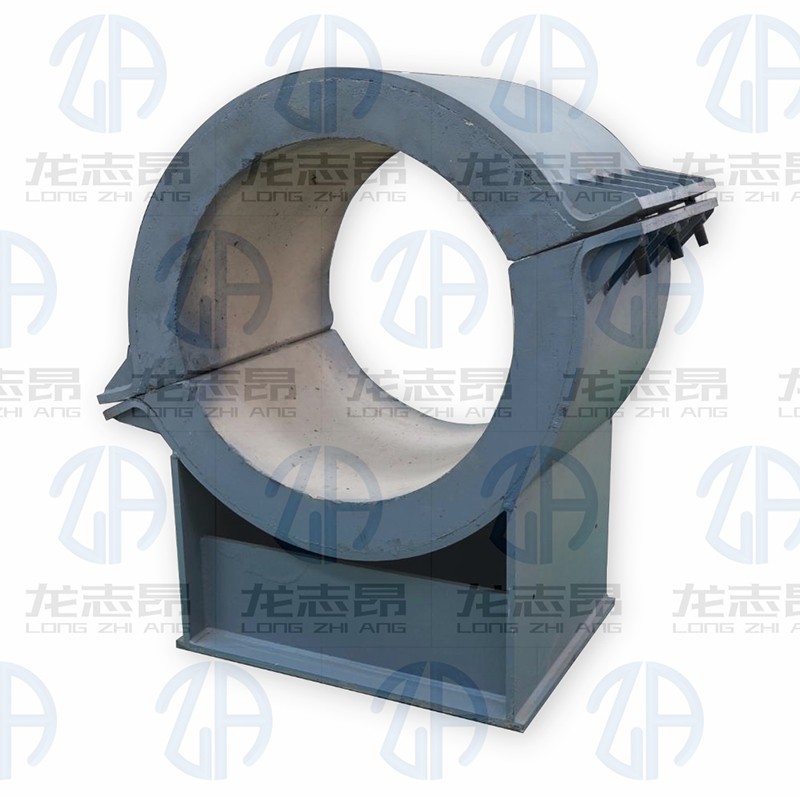
Vermiculite Insulation Pipe Bracket
Vermiculite is a lightweight, fire - resistant mineral that has excellent insulating properties. Vermiculite Insulation Pipe Bracket uses vermiculite as the insulating material. Vermiculite has a low thermal conductivity, which means it can effectively reduce heat transfer from the pipe to the support. It also has good mechanical strength, which allows it to support the weight of the pipe without deforming.
Foam - Based Insulated Supports
Foam - based insulated supports are another popular option. Foams like polyurethane or phenolic foam have very low thermal conductivity. They can be molded into different shapes to fit various pipe sizes and support configurations. These foams also have good resistance to moisture, which helps in preventing condensation and further heat loss.
Real - World Benefits of Using Insulated Pipe Supports
The benefits of using insulated pipe supports in reducing heat loss translate into real - world advantages for industries.
Energy Savings
By reducing heat loss, insulated pipe supports help industries save a significant amount of energy. In a large power plant, for example, even a small reduction in heat loss from pipes can lead to substantial energy savings over time. This not only reduces operational costs but also makes the plant more environmentally friendly by reducing its carbon footprint.
Extended Pipe Lifespan
When pipes experience less heat loss and more uniform temperatures, they are subject to less thermal stress. Thermal stress can cause pipes to expand and contract, which can lead to cracks and leaks over time. By using insulated pipe supports, the lifespan of the pipes can be extended, reducing the need for frequent repairs and replacements.
Improved Process Efficiency
In industrial processes, maintaining the right temperature of the fluids in the pipes is crucial for the efficiency of the process. Insulated pipe supports help in keeping the temperature stable, which can improve the overall efficiency of the process. For example, in a chemical reaction that requires a specific temperature range, insulated pipes can ensure that the reaction proceeds as intended.
Conclusion
So, to answer the question "Can insulated pipe supports reduce heat loss?" - the answer is a resounding yes! These supports play a vital role in reducing heat transfer, preventing condensation, and maintaining temperature uniformity in pipes. Whether you're dealing with steam pipelines, power plant pipes, or any other type of hot fluid - carrying pipes, insulated pipe supports can offer significant benefits in terms of energy savings, pipe lifespan, and process efficiency.
If you're in the market for high - quality insulated pipe supports, I'd love to have a chat with you. We've got a wide range of products, including the ones I've mentioned above, that can meet your specific needs. Don't hesitate to reach out for a discussion about your requirements and how our insulated pipe supports can work for you.
References
- "Thermal Insulation Handbook" by John Doe
- "Pipe Support Design and Engineering" by Jane Smith
- Industry reports on energy efficiency in industrial piping systems.