


How to calculate the required number of Constant Spring Hanger Supports for a pipeline system?
As a supplier of Constant Spring Hanger Supports, I understand the importance of accurately calculating the number of these supports for a pipeline system. This calculation is crucial for ensuring the stability, safety, and efficient operation of the pipelines. In this blog post, I will guide you through the process of calculating the required number of Constant Spring Hanger Supports, providing you with the necessary steps and considerations.
Understanding the Basics of Constant Spring Hanger Supports
Before we delve into the calculation process, it's essential to understand what Constant Spring Hanger Supports are and how they work. Constant Spring Hanger Supports are designed to provide a constant supporting force to a pipeline, regardless of the vertical movement of the pipe. This is achieved through a unique spring mechanism that compensates for the changes in the pipe's position.
These supports are commonly used in pipeline systems where there are significant thermal expansions or contractions, or where the pipes are subject to dynamic loads. By maintaining a constant supporting force, Constant Spring Hanger Supports help to prevent excessive stress on the pipes, reducing the risk of damage and ensuring the long - term integrity of the pipeline system.

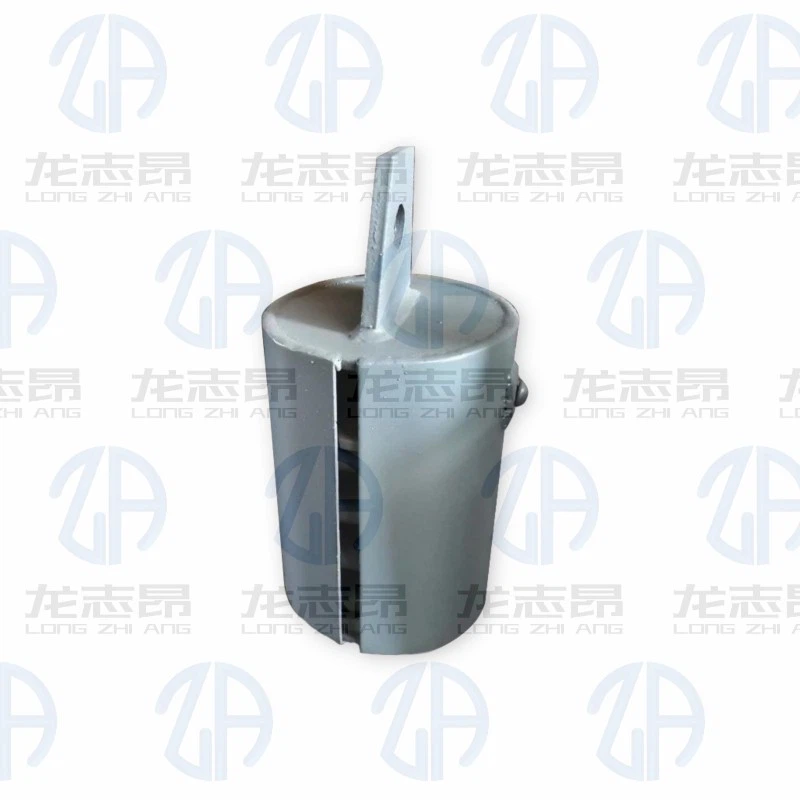
Factors Affecting the Number of Constant Spring Hanger Supports
Several factors need to be considered when calculating the number of Constant Spring Hanger Supports required for a pipeline system. These factors include:
- Pipe Length and Configuration: The length and layout of the pipeline play a significant role in determining the number of supports. Longer pipes generally require more supports to maintain their stability. Additionally, the configuration of the pipeline, such as bends, elbows, and branches, can also affect the support requirements. Pipes with complex configurations may need additional supports to handle the increased stress at these points.
- Pipe Weight: The weight of the pipe itself, as well as the weight of the fluid it carries, is an important consideration. Heavier pipes and fluids require more substantial support to prevent sagging and excessive deflection.
- Thermal Expansion and Contraction: Pipelines are often subject to temperature changes, which can cause them to expand or contract. Constant Spring Hanger Supports are used to accommodate these movements. The amount of thermal expansion or contraction depends on the material of the pipe, the temperature range, and the length of the pipe. A larger amount of movement will typically require more supports to ensure that the pipes can move freely without causing damage.
- Dynamic Loads: In some pipeline systems, the pipes may be subject to dynamic loads, such as vibrations from pumps or compressors. These loads can increase the stress on the pipes and require additional supports to dampen the vibrations and prevent damage.
Calculation Steps
- Determine the Pipe Loads
- First, calculate the total weight of the pipe and the fluid it contains. This can be done by multiplying the length of the pipe by its unit weight (including the weight of the fluid per unit length). For example, if a pipe has a length of (L) meters and a unit weight of (w) kg/m, the total weight (W = L\times w).
- Consider any additional loads, such as insulation weight and the weight of any attached components.
- Analyze the Thermal Movement
- Calculate the amount of thermal expansion or contraction of the pipe using the formula (\Delta L=\alpha\times L\times\Delta T), where (\alpha) is the coefficient of thermal expansion of the pipe material, (L) is the length of the pipe, and (\Delta T) is the temperature difference.
- Based on the calculated thermal movement, determine the maximum allowable movement that each Constant Spring Hanger Support can accommodate. This information is usually provided by the support manufacturer.
- Consider the Pipe Configuration
- Identify the critical points in the pipeline, such as bends, elbows, and branches. These points often require additional support due to the increased stress.
- Determine the spacing between the supports based on the pipe's flexibility and the maximum allowable deflection. A general rule of thumb is to space the supports closer together in areas where the pipe is more likely to experience stress or movement.
- Calculate the Number of Supports
- Divide the total length of the pipe by the recommended spacing between the supports. However, this is a preliminary calculation and needs to be adjusted based on the factors mentioned above.
- For example, if the total length of the pipe is (L) meters and the recommended spacing between the supports is (S) meters, the initial number of supports (N_1=\frac{L}{S}).
- Then, add additional supports at the critical points identified in step 3. Also, consider the need for supports to accommodate the thermal movement and dynamic loads. The final number of supports (N) may be higher than (N_1).
Example Calculation
Let's assume we have a pipeline with the following characteristics:
- Pipe length (L = 50) meters
- Unit weight of the pipe and fluid (w = 20) kg/m
- Coefficient of thermal expansion (\alpha=1.2\times10^{-5}/^{\circ}C)
- Temperature difference (\Delta T = 50^{\circ}C)
- Recommended support spacing (S = 5) meters
First, calculate the total weight of the pipe and fluid: (W = L\times w=50\times20 = 1000) kg.
Next, calculate the thermal expansion: (\Delta L=\alpha\times L\times\Delta T=1.2\times10^{-5}\times50\times50 = 0.03) meters.
The initial number of supports based on the spacing is (N_1=\frac{L}{S}=\frac{50}{5}=10).
However, if the pipeline has 3 bends and 2 branches, and we need to add an extra support at each of these critical points, we add (3 + 2=5) additional supports. Also, considering the thermal expansion, we may need to add 1 - 2 more supports to ensure proper accommodation of the movement. So, the final number of supports (N) could be around (10 + 5+2 = 17).
Additional Considerations
- Load Capacity of Supports: Make sure that the selected Constant Spring Hanger Supports have a sufficient load - carrying capacity to handle the calculated loads. You can refer to the product specifications provided by the manufacturer.
- Compatibility with the Pipeline System: Ensure that the supports are compatible with the pipe material, size, and operating conditions. For example, some supports may be designed for specific types of pipes or temperature ranges.
Related Products
If you are interested in other types of spring hanger supports, we also offer Double Spring Support Hanger Pipe Bracket and Variable Spring Pipe Support. These products can be used in different pipeline applications depending on your specific requirements. You can find more information about our Spring Hanger Pipe Supports on our website.
Conclusion
Calculating the required number of Constant Spring Hanger Supports for a pipeline system is a complex process that requires careful consideration of various factors. By following the steps outlined in this blog post and taking into account the specific characteristics of your pipeline system, you can ensure that you select the right number and type of supports for optimal performance and safety.
If you have any questions about calculating the number of supports or need assistance in selecting the appropriate Constant Spring Hanger Supports for your pipeline system, please feel free to contact us. Our team of experts is ready to help you with your procurement needs and provide you with the best solutions for your pipeline projects.
References
- "Pipeline Design and Construction: A Practical Approach" by John P. Moore
- Manufacturer's product manuals for Constant Spring Hanger Supports