


As a supplier of Variable Spring Pipe Supports, I've witnessed firsthand the significant role that spring stiffness plays in the performance of these crucial components. In this blog, I'll delve into how spring stiffness affects the performance of a variable spring pipe support, drawing on industry knowledge and real - world experience.
Understanding Variable Spring Pipe Supports
Before discussing the impact of spring stiffness, it's essential to understand what variable spring pipe supports are. Variable Spring Pipe Supports are designed to support pipes and equipment while accommodating thermal expansion and contraction. They work by providing a varying amount of support force as the pipe moves up or down due to temperature changes. You can learn more about Variable Spring Pipe Support on our website.
The Concept of Spring Stiffness
Spring stiffness, often denoted as the spring constant (k), is a measure of how much force is required to compress or extend a spring by a certain distance. Mathematically, it is defined as the ratio of the force applied to the spring (F) to the displacement (x) it causes: k = F/x. A higher spring stiffness means that more force is needed to produce a given displacement, while a lower spring stiffness implies that the spring can be more easily compressed or extended.
Impact on Load - Carrying Capacity
One of the primary ways spring stiffness affects the performance of a variable spring pipe support is in its load - carrying capacity. A spring with higher stiffness can support larger loads. When a pipe experiences significant weight due to the fluid it carries, the contents of the pipe, or external forces, a stiffer spring can better maintain the required support without excessive deflection.
For example, in a large - scale industrial pipeline system that transports heavy - density fluids, a variable spring pipe support with high spring stiffness is necessary. If a spring with low stiffness is used in such a scenario, it may become over - compressed, leading to improper support and potential damage to the pipe and the support structure. On the other hand, if the load on the pipe is relatively light, using a spring with extremely high stiffness can be overkill. The support may not respond effectively to small displacements, causing unnecessary stress on the pipe due to the lack of flexibility.
Response to Thermal Movements
Thermal expansion and contraction are common phenomena in pipe systems. As the temperature of the pipe changes, it expands or contracts, and the variable spring pipe support needs to adjust accordingly. Spring stiffness has a direct impact on how well the support can respond to these thermal movements.
A spring with lower stiffness is more flexible and can easily adapt to small thermal displacements. It can smoothly adjust the support force as the pipe moves, minimizing the stress on the pipe. In applications where the temperature changes are relatively small and gradual, a variable spring pipe support with lower spring stiffness is often preferred.
Conversely, in systems where there are large and rapid temperature changes, a stiffer spring may be required. A high - stiffness spring can provide more stable support during sudden expansions or contractions. It can prevent the pipe from moving too far out of its intended position, which is crucial for maintaining the integrity of the entire pipeline system.
Natural Frequency and Vibration Damping
The spring stiffness also influences the natural frequency of the variable spring pipe support - pipe system. The natural frequency is the frequency at which the system will vibrate when disturbed. A higher spring stiffness generally leads to a higher natural frequency.
In a pipeline system, vibrations can be caused by fluid flow, machinery operation, or external disturbances. If the natural frequency of the support - pipe system coincides with the frequency of the disturbing force, resonance can occur. Resonance can amplify the vibrations, leading to excessive stress on the pipe and the support, and potentially causing failure.
By carefully selecting the spring stiffness, we can adjust the natural frequency of the system to avoid resonance. Additionally, spring stiffness affects the damping characteristics of the support. A spring with appropriate stiffness can help dissipate the energy of vibrations, reducing the amplitude of the vibrations and protecting the pipeline system.
Fatigue Life
The fatigue life of a variable spring pipe support is another important performance aspect affected by spring stiffness. Fatigue occurs when a spring is subjected to repeated loading and unloading cycles. A spring with too high stiffness may experience high stress levels during each cycle, especially when there are significant displacements. This can lead to premature fatigue failure.
On the other hand, a spring with very low stiffness may not be able to maintain its shape and performance over a large number of cycles. It may deform permanently or lose its ability to provide the required support force. Therefore, finding the optimal spring stiffness is crucial for ensuring a long fatigue life of the variable spring pipe support.

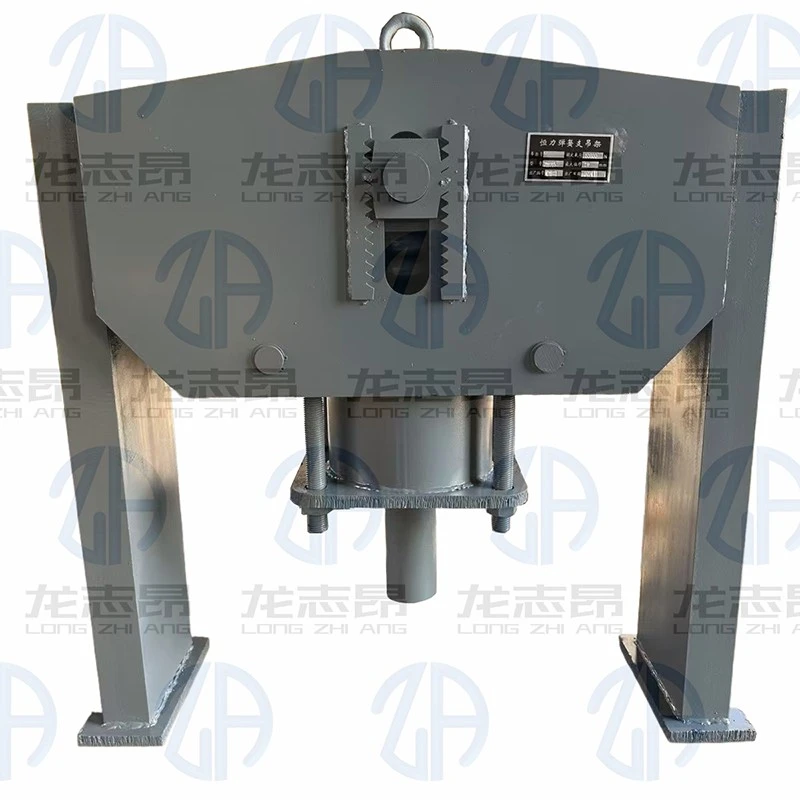
Comparison with Constant Spring Hanger Support
It's also worth comparing variable spring pipe supports with Constant Spring Hanger Support. Constant spring hanger supports are designed to provide a nearly constant support force regardless of the pipe's vertical movement. While variable spring pipe supports rely on the change in spring force with displacement, the spring stiffness in constant spring hanger supports is engineered to achieve a different performance objective.
In some applications, a combination of variable spring pipe supports and constant spring hanger supports may be used. The choice between them depends on factors such as the magnitude of thermal movements, the load characteristics, and the required support force stability. Understanding the role of spring stiffness in variable spring pipe supports helps in making more informed decisions when designing and selecting the appropriate support systems.
Selecting the Right Spring Stiffness
As a supplier of Spring Hanger Pipe Supports, we understand the importance of selecting the right spring stiffness for each application. When working with customers, we consider several factors:
- Load requirements: We analyze the weight of the pipe, the fluid it carries, and any additional loads to determine the appropriate load - carrying capacity and spring stiffness.
- Thermal movements: By understanding the temperature range and the expected thermal expansion and contraction of the pipe, we can choose a spring stiffness that allows for smooth adjustment.
- Vibration characteristics: We assess the potential sources of vibrations and calculate the natural frequency of the system to select a spring stiffness that avoids resonance.
- Fatigue considerations: We take into account the expected number of loading and unloading cycles to ensure that the spring stiffness is selected to provide a long fatigue life.
Conclusion
In conclusion, spring stiffness is a critical factor that significantly affects the performance of a variable spring pipe support. It impacts load - carrying capacity, response to thermal movements, natural frequency and vibration damping, and fatigue life. As a supplier, we are committed to providing high - quality variable spring pipe supports with the right spring stiffness for each specific application.
If you are in need of variable spring pipe supports or have any questions about spring stiffness and its impact on performance, we encourage you to reach out to us for a detailed discussion. Our team of experts is ready to assist you in selecting the most suitable products for your pipeline system.
References
- "Pipe Support Engineering Handbook" by A. W. Holroyd.
- "Mechanical Springs" by Design Handbook, Society of Automotive Engineers.
- Industry standards and guidelines related to pipe support design and spring applications.