


Hey there! As a supplier of Constant Spring Hanger Supports, I've seen firsthand how the layout of these nifty devices can have a huge impact on the stress distribution of a pipeline. In this blog, I'm gonna break down exactly how that works and why it matters.
Let's start with the basics. A pipeline is like the circulatory system of an industrial facility. It transports all sorts of fluids - like water, oil, and gas - from one place to another. But just like our blood vessels, pipelines are under a lot of stress. There's the weight of the fluid inside, the pressure it's under, and even external factors like temperature changes and vibrations. If the stress isn't managed properly, it can lead to all sorts of problems, from leaks to complete failures.
That's where Constant Spring Hanger Supports come in. These supports are designed to provide a constant supporting force to the pipeline, regardless of its vertical movement. They work like a well - tuned suspension system for your pipeline, absorbing the shocks and stresses and keeping everything stable.
Now, let's talk about how the layout of these supports affects stress distribution.
Placement Along the Pipeline
The first thing to consider is where you place the Constant Spring Hanger Supports along the pipeline. If you space them too far apart, there'll be large sections of the pipeline that are unsupported. These unsupported areas will bear a disproportionate amount of stress, kind of like how a long plank of wood will sag in the middle if it's only supported at the ends. Over time, this can cause the pipeline to bend or even crack.
On the other hand, if you place the supports too close together, you might be over - supporting the pipeline. This can lead to a different kind of problem. The supports can restrict the natural movement of the pipeline due to thermal expansion or contraction. When the pipeline tries to expand or contract and can't, it builds up internal stress. This is similar to how a rubber band gets more and more tense if you try to hold it in a fixed position while stretching or compressing it.
So, finding the right spacing is crucial. It usually depends on factors like the diameter of the pipeline, the type of fluid it's carrying, and the operating temperature. For example, a pipeline carrying a high - temperature fluid will experience more thermal expansion, so you might need to space the supports a bit further apart to allow for that movement.
Support at Bends and Fittings
Bends and fittings in a pipeline are like the joints in our bodies. They're areas where the flow of the fluid changes direction, and this creates additional stress. That's why it's super important to place Constant Spring Hanger Supports at these critical points.

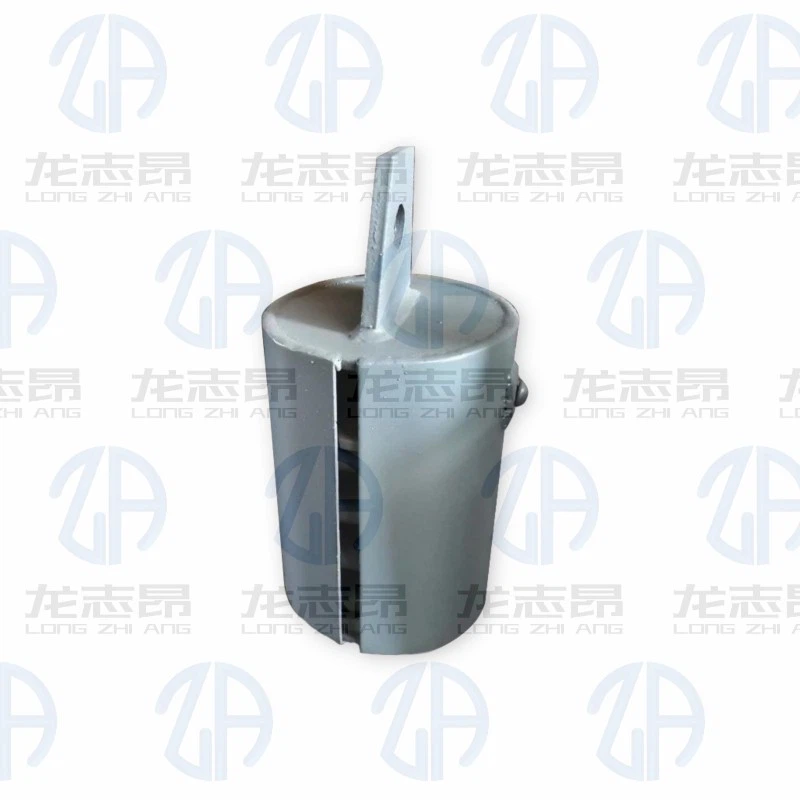
When the fluid changes direction at a bend, it exerts a lateral force on the pipeline. Without proper support, this force can cause the bend to deform or even break. A well - placed support at the bend can counteract this lateral force and distribute the stress more evenly across the pipeline.
Similarly, fittings like valves and flanges are also areas of high stress. Valves can cause pressure fluctuations in the pipeline, and flanges need to be held in place securely to prevent leaks. By placing supports near these fittings, you can ensure that the stress is managed effectively and the integrity of the pipeline is maintained.
Interaction with Other Supports
In a real - world pipeline system, Constant Spring Hanger Supports don't work in isolation. They interact with other types of supports, like Spring Loaded Pipe Supports and Variable Spring Pipe Support.
Variable Spring Pipe Supports, for example, provide a varying supporting force depending on the vertical movement of the pipeline. They're often used in areas where the movement is relatively small. Constant Spring Hanger Supports, on the other hand, are better suited for areas with larger vertical movements.
When these different types of supports are used together, their layout needs to be carefully planned. You need to make sure that they work in harmony to distribute the stress evenly. If one type of support is over - compensating for the stress, it can put extra strain on the other supports and the pipeline itself.
Impact on Pipeline Vibration
Vibration is another factor that can cause stress in a pipeline. It can be caused by things like the flow of the fluid, machinery nearby, or even wind. Constant Spring Hanger Supports can play a big role in reducing vibration.
By strategically placing the supports, you can dampen the vibrations and prevent them from building up. For example, placing supports at the natural frequencies of the pipeline can help to absorb the vibrational energy. This is similar to how shock absorbers in a car reduce the vibrations from the road.
If the supports are not laid out correctly, the vibrations can amplify, leading to increased stress on the pipeline. This can cause fatigue failure over time, where the pipeline gradually weakens and eventually breaks.
Importance of Professional Design
Given all these factors, it's clear that designing the layout of Constant Spring Hanger Supports is not a simple task. It requires a deep understanding of the pipeline system, the fluid dynamics, and the mechanical properties of the materials involved.
That's where we, as a Constant Spring Hanger Support supplier, come in. We have a team of experts who can analyze your pipeline system and design a support layout that optimizes stress distribution. We take into account all the factors I've mentioned above, as well as any specific requirements you might have.
Whether you're building a new pipeline or upgrading an existing one, our Spring Hanger Pipe Supports are designed to provide the best possible support. We use high - quality materials and advanced manufacturing techniques to ensure that our supports are durable and reliable.
If you're in the market for Constant Spring Hanger Supports or need advice on support layout, don't hesitate to reach out. We're here to help you ensure the safety and efficiency of your pipeline system. Contact us today to start a discussion about your specific needs.
References
- Pipeline Stress Analysis Handbook, Second Edition by John P. McKetta
- Fluid Mechanics for Chemical Engineers by Noel de Nevers
- Mechanical Design of Process Systems by Max Peters and Klaus Timmerhaus